
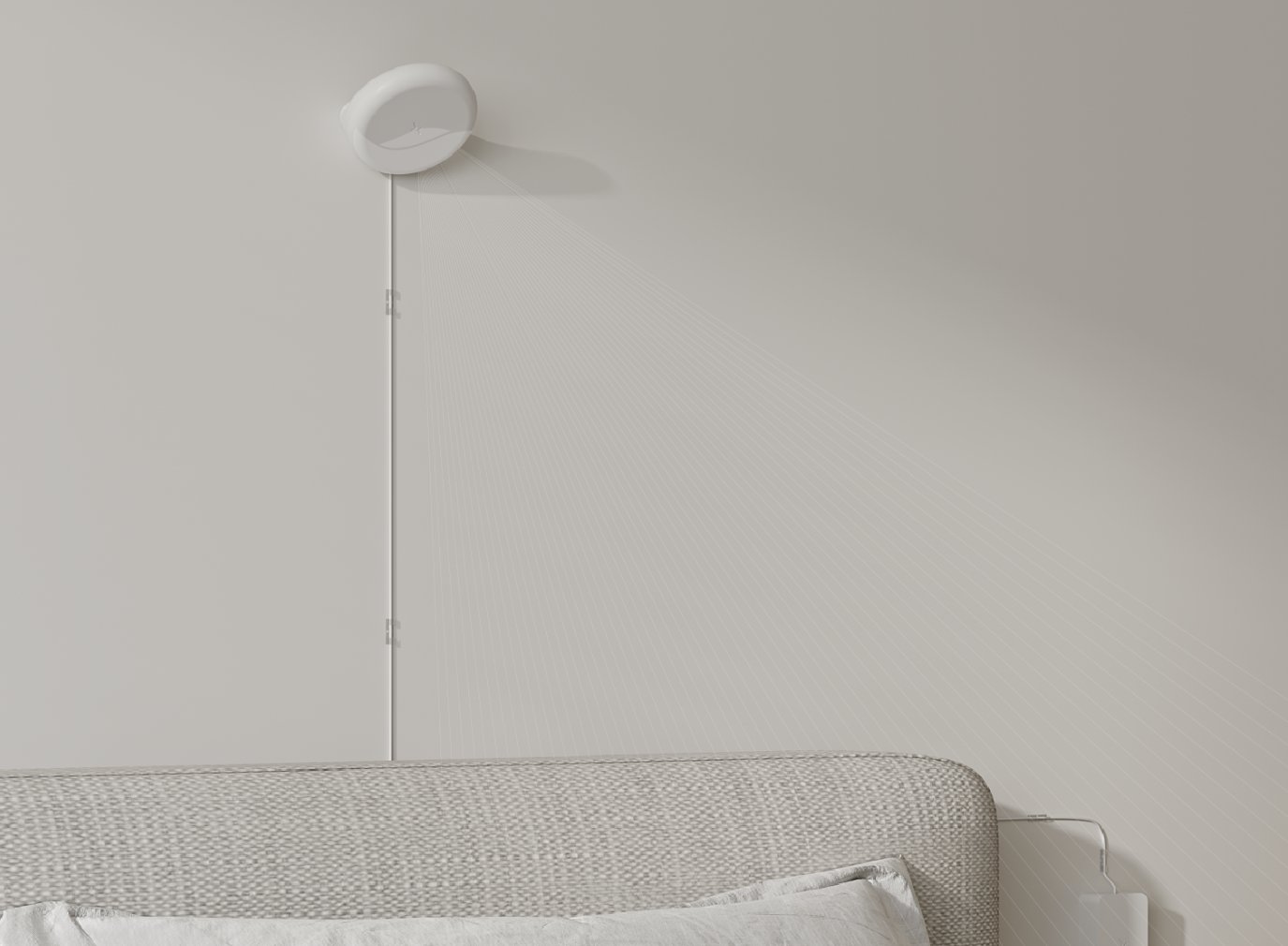
One sensor on the wall measures heart rate, respiration and movement through the air and through bedding, day and night. It gives care teams a trend they can act on days before a person deteriorates.
Vital signs are usually taken by hand a few times a day. Between those checks a person can drift a long way from their own normal, and the first sign is often an ambulance.
Wearables only work when they are charged and worn. Cameras are not permitted in most of the places where watching matters most. Our sensor asks nothing of the person being monitored.
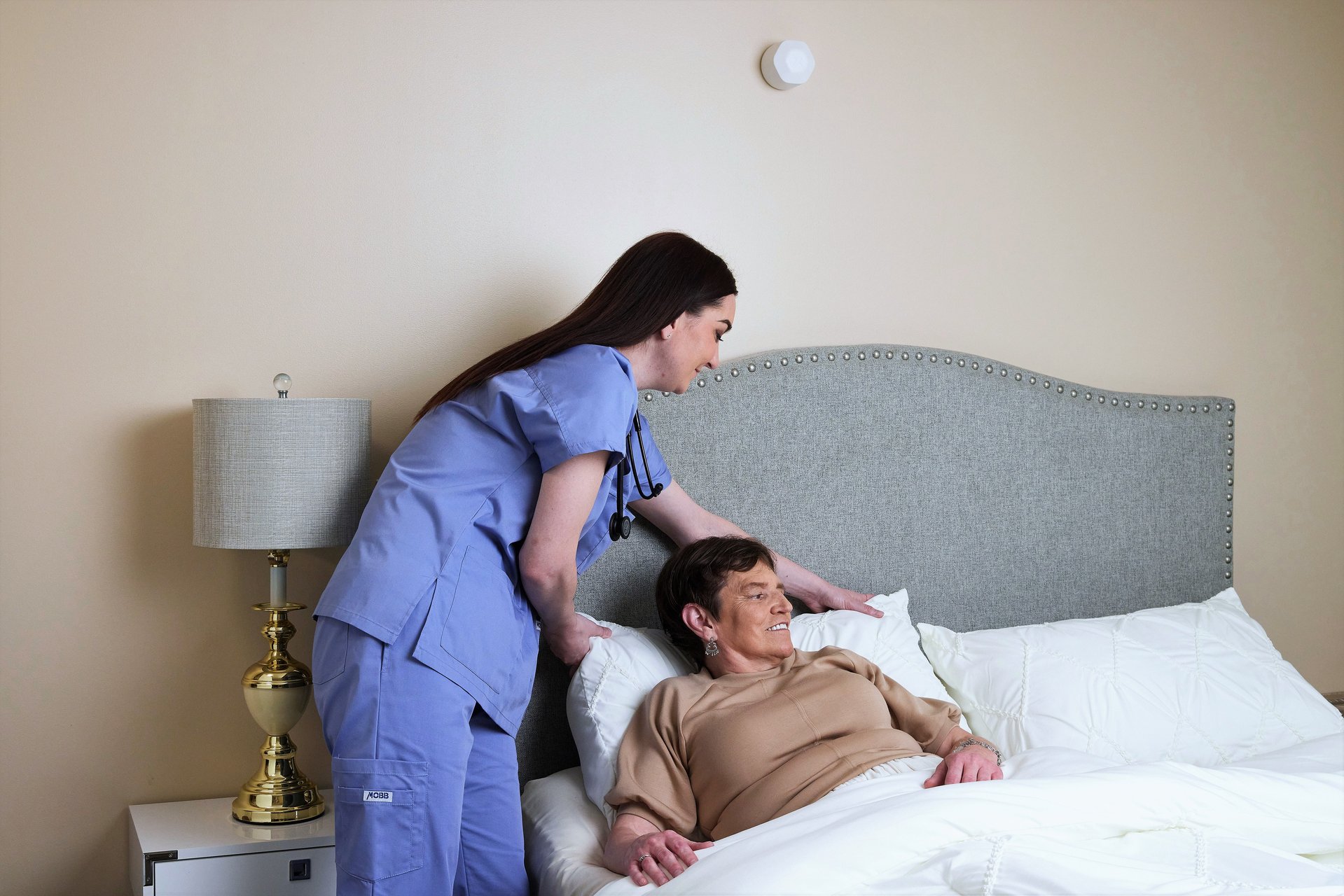
Each person is measured against their own baseline, so a change is meaningful even when every reading still sits inside the normal range.
Continuous resting heart rate and respiration surface a sustained shift from a person's own baseline, typically days before an acute event.
Instead of watching everyone equally, staff see the small number of people whose overnight trend has moved, and can follow their own clinical protocol.
Nights, weekends and the hours between rounds are documented rather than assumed, which supports both clinical decisions and reporting.
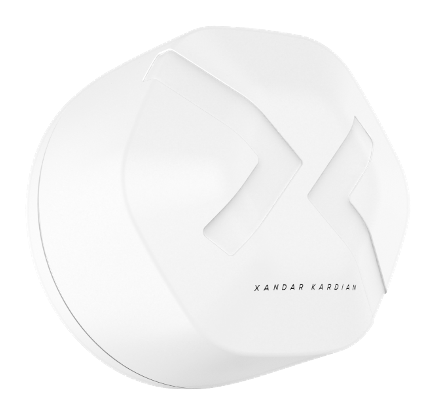
The sensor emits an extremely low-power radio pulse and reads the micro-movement of the chest wall as a person breathes and as the heart beats. It works through blankets and clothing and does not depend on the person's posture.
Mounted on the wall or ceiling. No contact with the person, no compliance required, nothing for them to remove or break.
Radar captures movement, not images. It can be used in bedrooms, bathrooms, seclusion rooms and cells where cameras cannot.
Vital signs are computed on the sensor itself, which keeps data volumes small and supports on-premises and in-country deployments.
The same sensor and the same analysis serve very different buildings. Choose the one closest to your organisation.
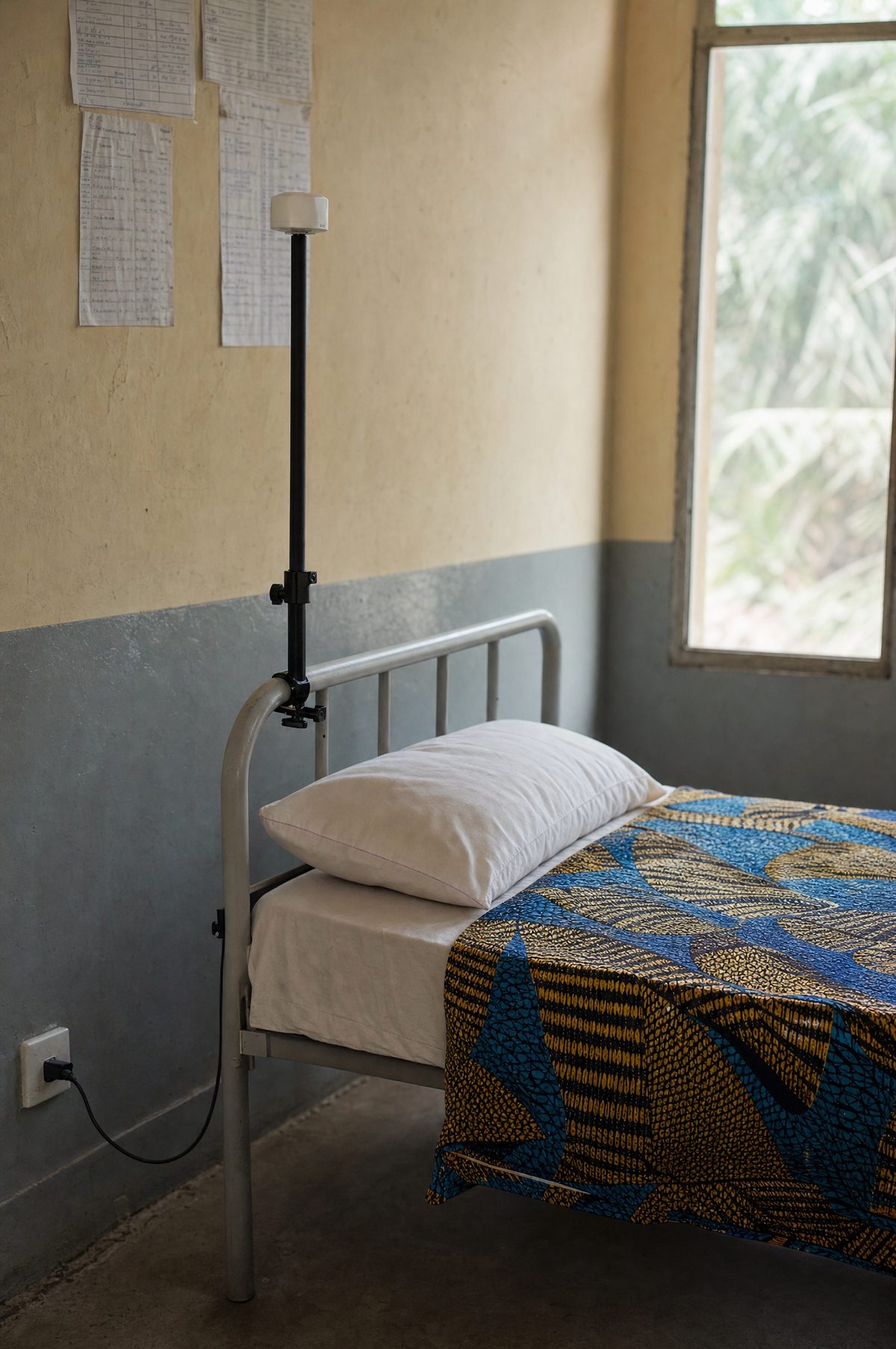
Ward and post-acute monitoring where continuous vitals are needed without wiring a patient to a monitor.
Talk to us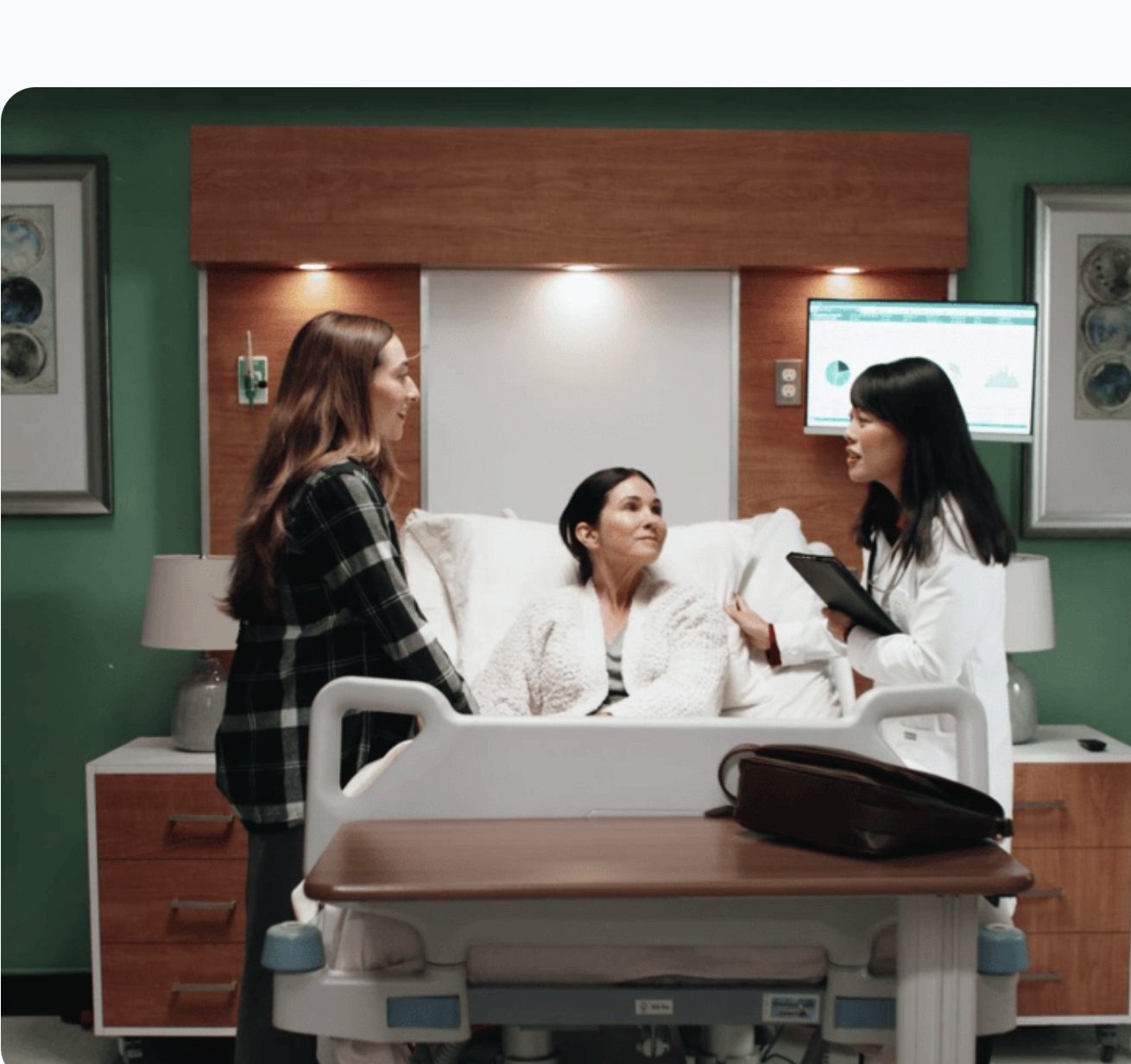
Skilled nursing and aged care, where early detection can prevent an avoidable transfer to hospital.
Talk to us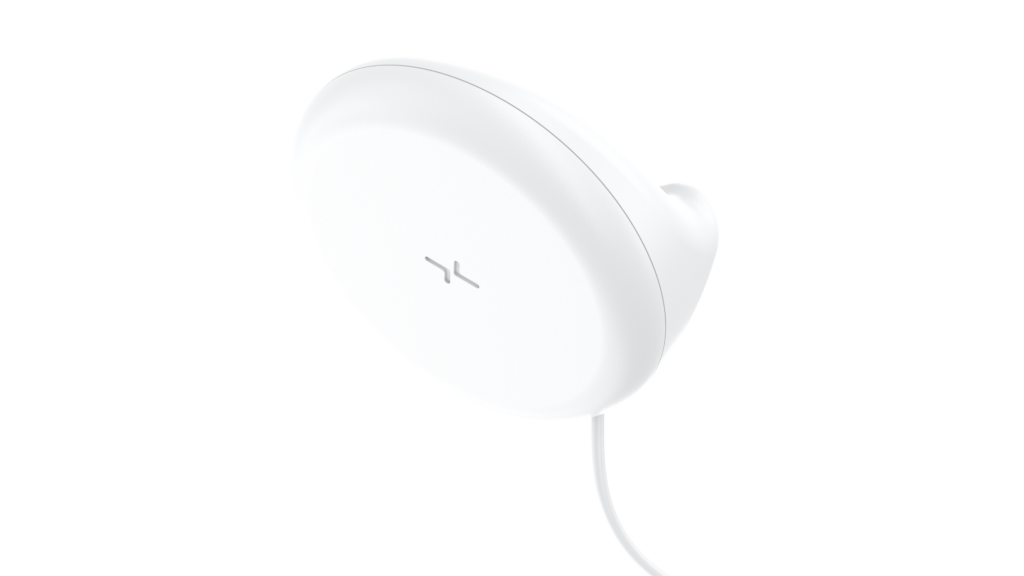
Cells and holding areas, where no wearable or camera is workable and a medical emergency must be seen immediately.
Talk to us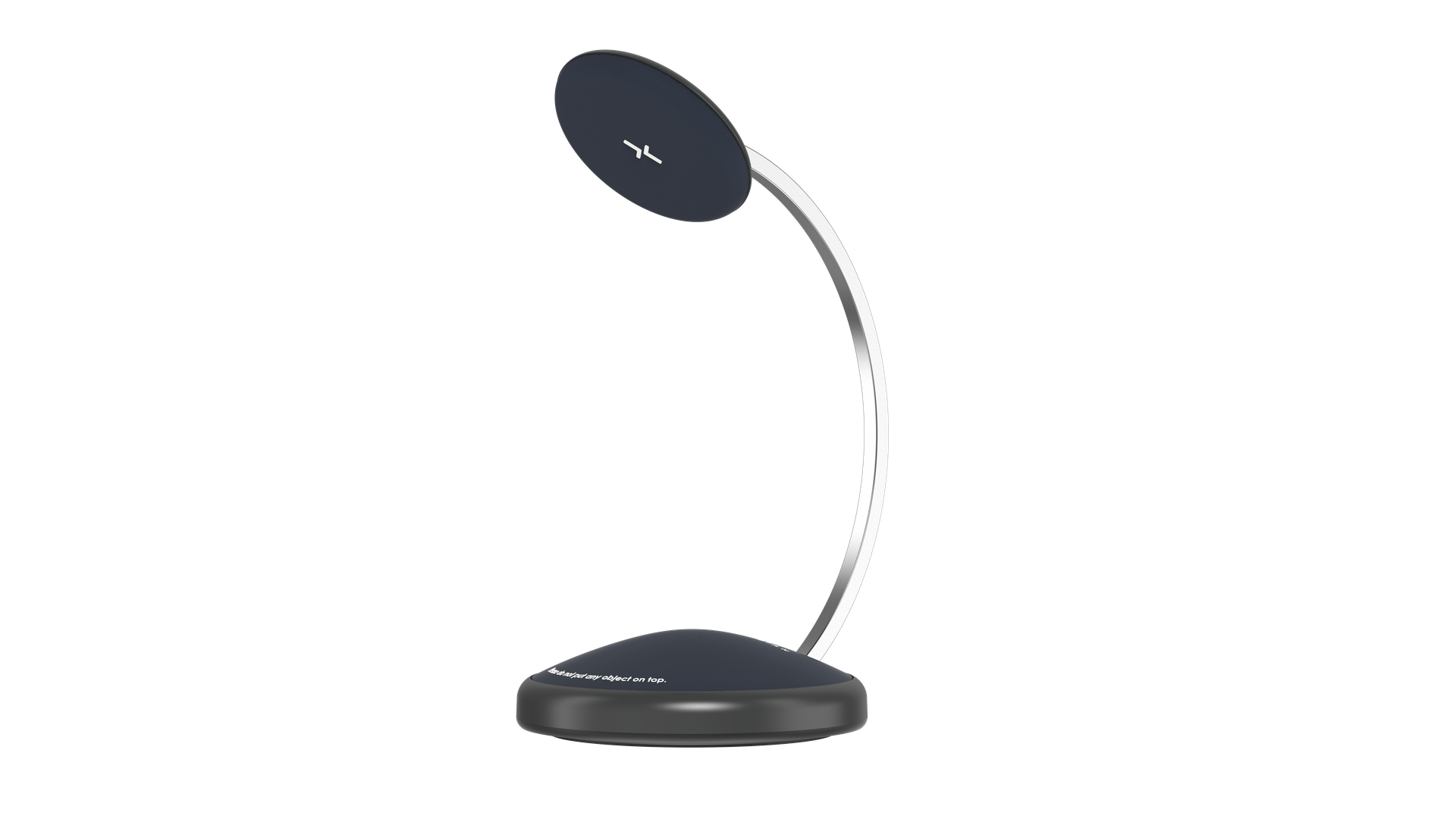
For providers running monitoring programmes who need reliable data from a home without a wearable.
Talk to usWe would rather show the paperwork than make a claim. Full documentation is available to organisations evaluating us.
Cleared for prescription use in the United States, Canada, Australia, Singapore, Thailand and South Africa. Registration in other markets is in progress. The device measures heart rate, respiration, movement and presence; it is not an alarm system for acute life-threatening events and does not diagnose disease.
A sensor goes up with two strips of tape and two cables. From there the data can stay entirely inside your environment or flow into the systems you already run.
Wall or ceiling above the bed. No structural work and no wiring to the person.
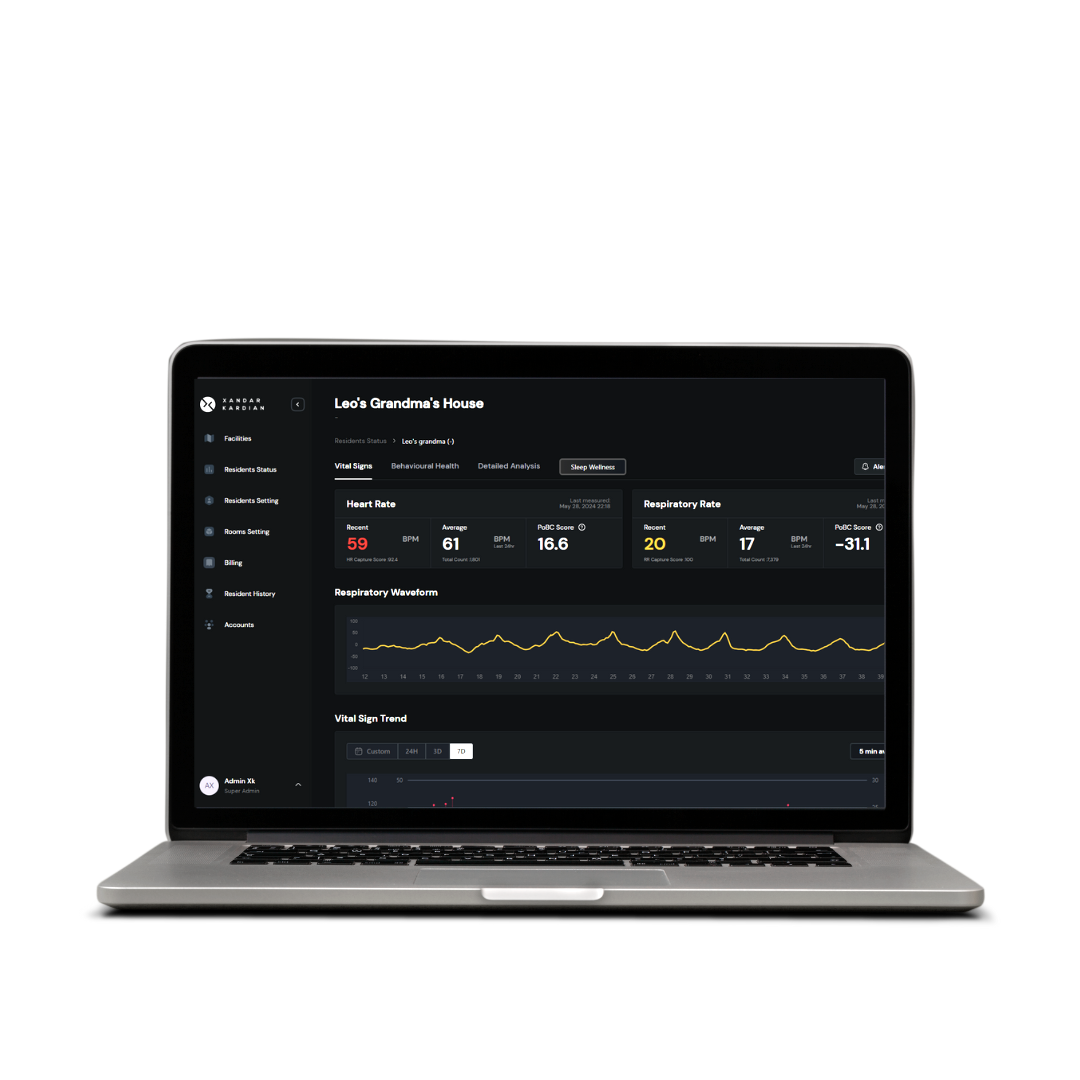
Our dashboard, your own systems through the API, or an on-premises deployment where data cannot leave the building.
Thresholds and escalation follow your protocol, not ours.
We sell through partners in most markets. If you serve care organisations and want a contactless monitoring line, we should talk.
Territory agreements for partners who can carry stock, install and support customers in their market.
For organisations running remote monitoring programmes who need a device that works without patient compliance.
API access for platforms that want continuous vital signs inside their own product.
Whether you want a demonstration, a quotation, documentation for a review, or support with a deployment you already run, this reaches us directly.
You can also write to sam@xk.inc.